Why Birds Keep Hitting Commercial Windows—and How Bird-Safe Film Can Help Atlanta Properties
Why Clear and Reflective Glass Can Be Dangerous for Birds
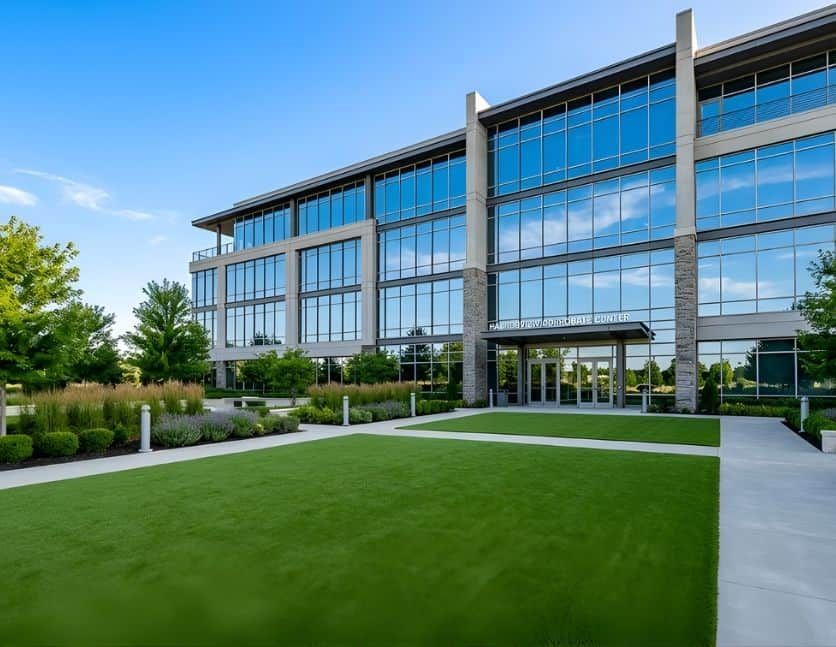
Large windows can make a commercial property feel brighter, more open, and more connected to the surrounding landscape. Unfortunately, the same glass that creates an attractive architectural feature can be difficult for birds to recognize as a solid surface. Reflections, transparency, lighting, and nearby landscaping can all make a window appear to be a safe flight path.
Commercial buildings in Atlanta and throughout the Southeast may experience bird collisions at office windows, hotel lobbies, schools, healthcare facilities, multifamily communities, retail centers, and glass walkways. These incidents are not always caused by unusual building designs. Even ordinary windows can become hazardous when they reflect trees, sky, water, or open space.
People understand that a reflection in a window is not a real landscape. Birds do not necessarily interpret the surface the same way. A bird may see reflected branches or clouds and attempt to fly toward them. From its perspective, the glass may appear to continue the surrounding environment rather than interrupt it.
Transparent glass can create a different problem. When a bird can see through a lobby, glass corridor, corner window, or covered walkway to landscaping on the opposite side, the opening may look like a clear route. The bird may not recognize that a pane of glass blocks the path.
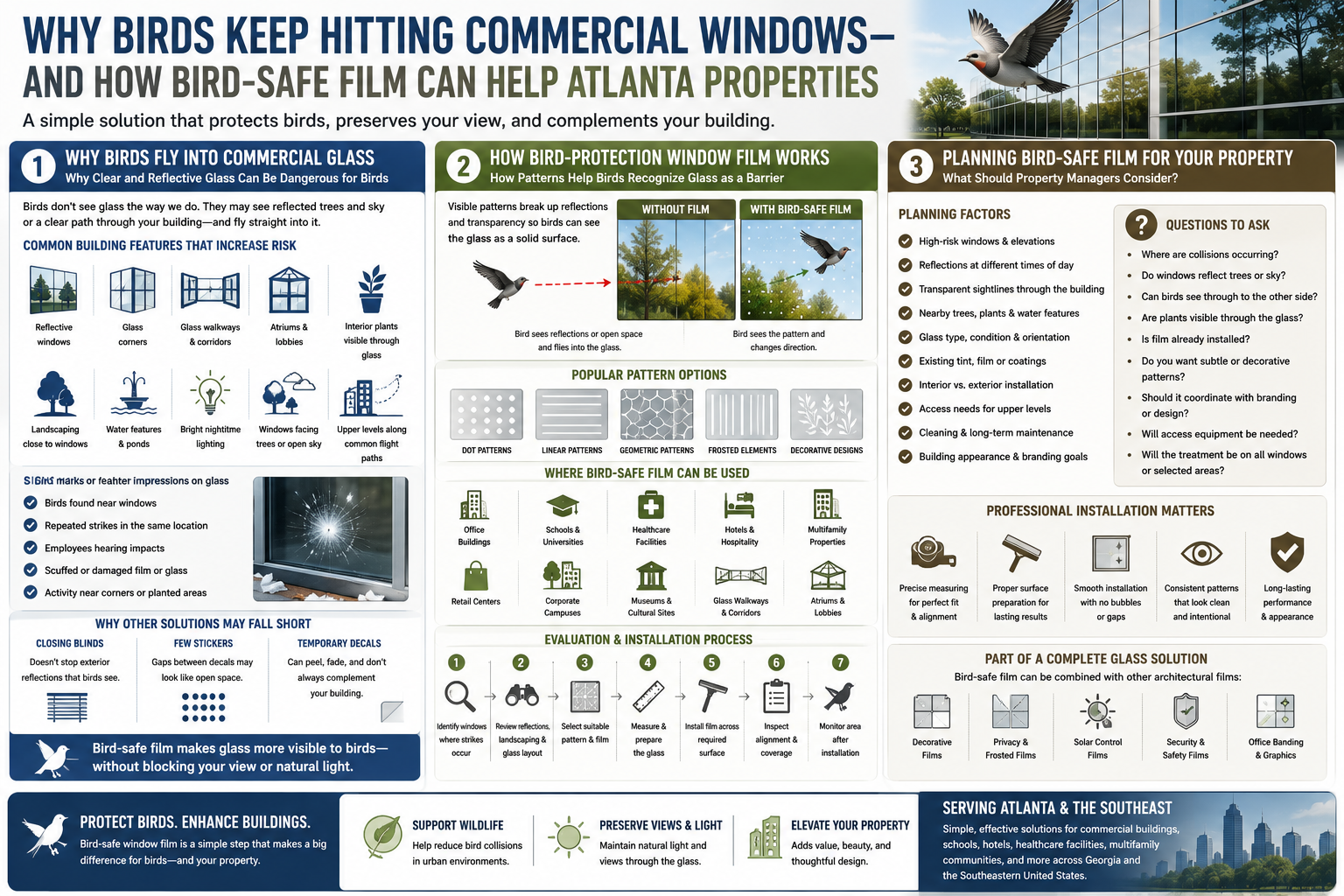
Building features that may increase the risk of bird collisions include:
- Large reflective windows facing trees, gardens, or open sky
- Glass corners that appear open from certain angles
- Transparent walkways connecting two buildings
- Atriums and lobbies with glass on opposite sides
- Interior plants that are clearly visible through exterior windows
- Landscaping positioned close to reflective glass
- Windows near ponds, fountains, or other water features
- Bright interior lighting visible at night
- Upper-level windows along common flight paths
- Highly polished or mirrored architectural glass
Landscaping can make the problem more complicated. Trees, shrubs, and planted areas improve the appearance of a property, but their reflection may create the illusion of additional habitat. A bird leaving a nearby tree may see more trees in the glass and fly directly toward the reflected image.
The location of the window can also affect how often collisions occur. One side of a building may reflect morning light and nearby trees, while another side may create a stronger reflection later in the day. Glass corners and windows near landscaped courtyards may experience repeated incidents because birds approach them from predictable directions.
Some properties notice more collisions during seasonal migration periods. Birds may be moving through an unfamiliar area, traveling in larger numbers, or flying at different elevations. A section of glass that seems relatively quiet during one part of the year may become a recurring problem during another.
Signs that a property may have a recurring bird-collision problem include:
- Feather impressions, smudges, or impact marks on the glass
- Birds repeatedly found beneath the same windows
- Employees or visitors regularly hearing impacts
- Collisions occurring near glass corners or connecting walkways
- Repeated activity around windows facing trees or planted areas
- Damage or scuffing on existing decals or film
- Incidents occurring at similar times of day
- Birds approaching transparent lobbies or atriums as though they are open
Property managers may initially try closing blinds or moving interior plants. Those changes can sometimes reduce transparency, but they may not correct exterior reflections. A bird approaching from outside may still see trees, clouds, or landscaping reflected across the surface of the glass.
A few isolated stickers may not solve the problem either. When decals are placed far apart, birds may interpret the open spaces between them as large enough to fly through. The important factor is not simply having something attached to the window. The pattern must make the full surface easier to recognize as a barrier.
Temporary stickers can also look inconsistent with the architecture of a commercial property. They may fade, peel, or create an improvised appearance that does not match the building’s design. A professionally selected bird-protection film can provide more consistent coverage while maintaining a clean architectural finish.
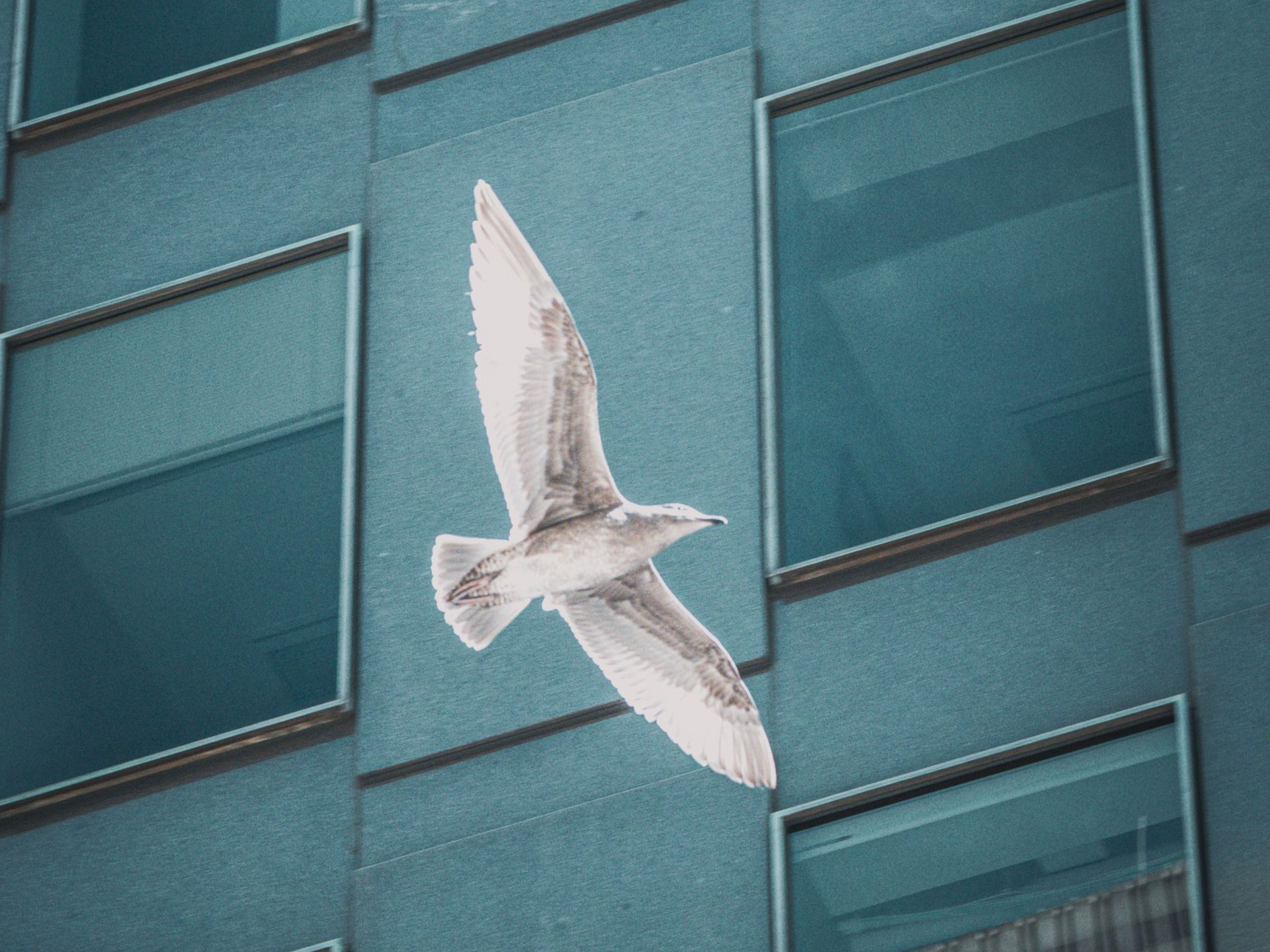
Bird-safe window film uses visible markings across the glass to interrupt reflections and transparency. The pattern helps communicate that the surface is solid, reducing the appearance of an open flight path. Depending on the selected product, the film may use dots, lines, decorative shapes, or other repeated elements.
The goal is not necessarily to make the window dark or completely opaque. Many bird-protection films are designed to preserve natural light and much of the outward view. The treatment can remain subtle for people inside the building while becoming more noticeable to birds approaching from outside.
Bird-safe film can be particularly useful when property owners want to address high-risk glass without replacing the existing windows. It may be installed on selected elevations, corners, walkways, or other areas where collisions occur most frequently.
Simple Architectural Finishes can evaluate the glass, reflections, surrounding landscaping, and architectural goals of a commercial property. That evaluation can help determine where bird-protection film may be appropriate and which pattern can improve visibility while complementing the building’s appearance.
How Patterns Help Birds Recognize Glass as a Barrier
Bird-protection window film works by adding a repeated visual pattern across the glass. The pattern breaks up reflected trees, sky, water, and landscaping, making the window easier for birds to distinguish from the environment around it.
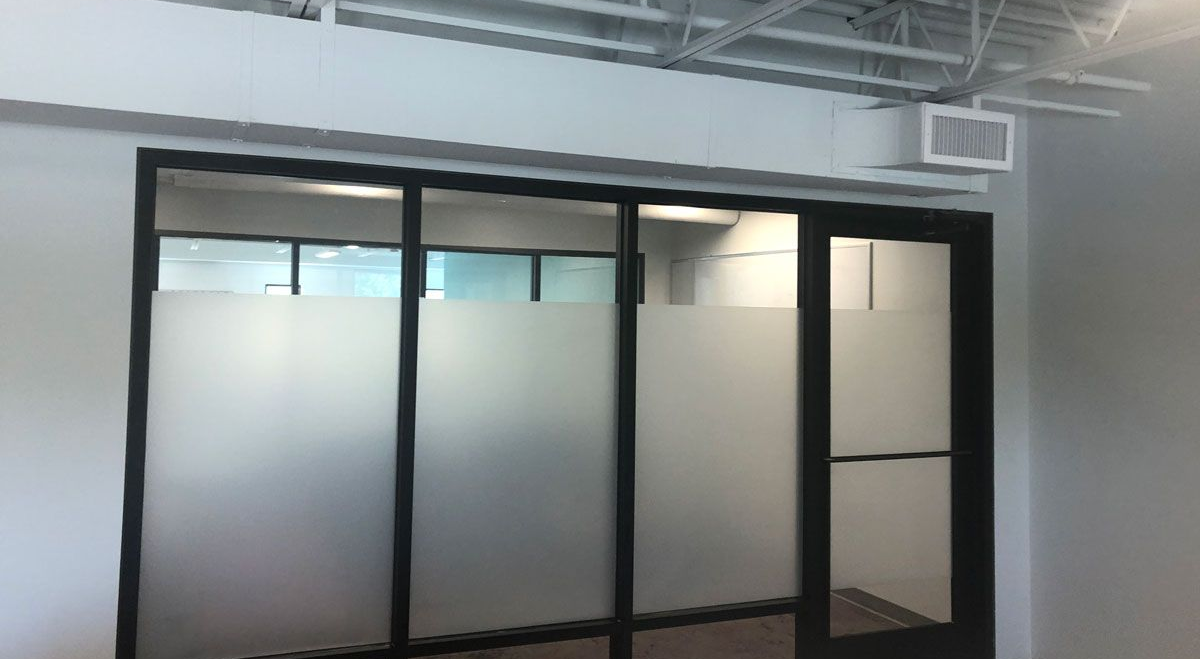
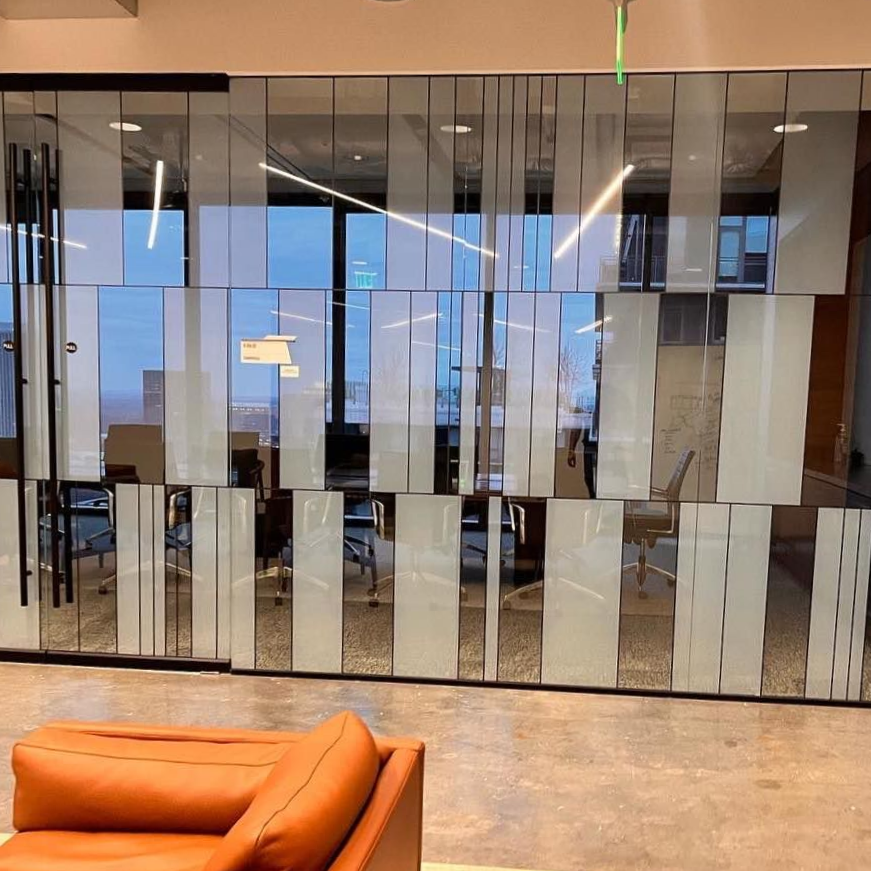
The markings may appear as dots, stripes, lines, geometric shapes, frosted elements, or another coordinated design. Rather than relying on one or two large decals, the film creates consistent visual information across the treated area.
Spacing matters because birds may attempt to fly through areas that appear open. A pattern that leaves large, unmarked sections may not communicate that the entire window is blocked. Professionally designed bird-safe products use coverage and spacing intended to make the surface more recognizable.
Common bird-protection film styles may include:
- Small repeated dot patterns
- Horizontal or vertical lines
- Geometric grids
- Subtle frosted markings
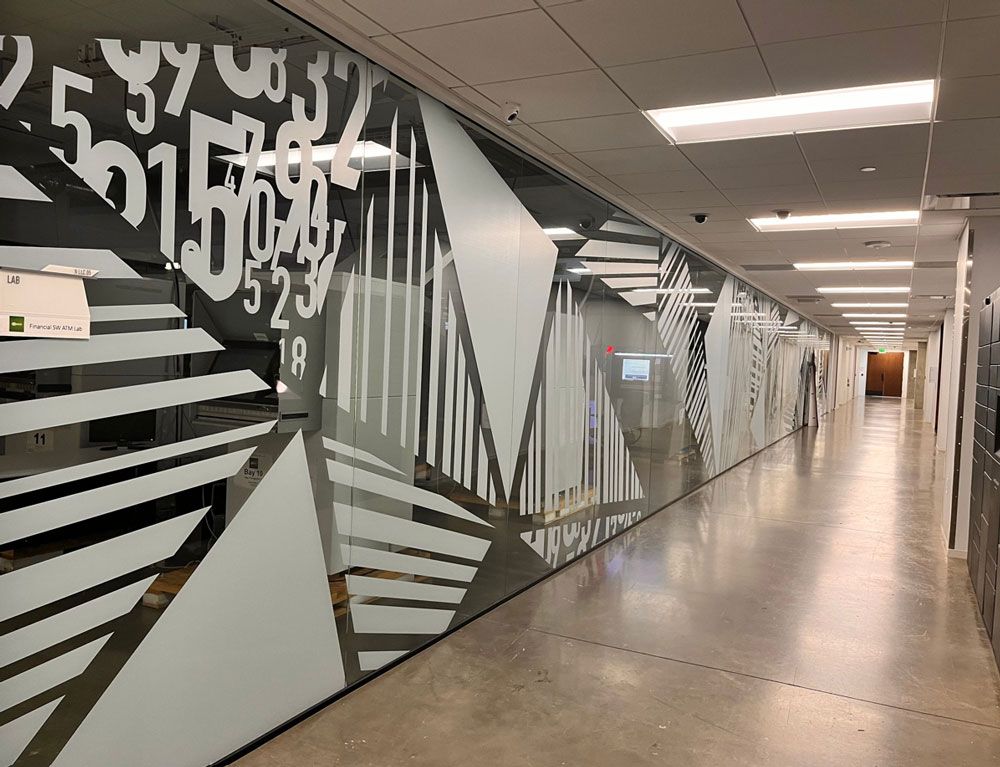
- Decorative patterns that coordinate with the architecture
- Custom designs created for selected glass areas
A well-selected pattern can reduce the visual confusion created by reflective or transparent glass without making the building feel closed off. Natural light can still enter the interior, and occupants may retain much of their view through the window.
The exact visual effect depends on the pattern, opacity, color, installation surface, and viewing distance. Some treatments are designed to remain very subtle from inside, while others become an intentional decorative feature that adds texture or branding to the exterior.
Bird-safe film can sometimes serve more than one design goal. A patterned treatment may improve bird visibility while also adding privacy, reducing visual clutter, creating office banding, or reinforcing an architectural theme. This can make the project feel like a planned design improvement rather than a temporary correction.
Where Bird-Safe Film Can Be Installed
Bird collisions can occur on many types of commercial properties, but the highest-risk areas are often those where glass reflects natural surroundings or creates the appearance of an open route. A site evaluation can identify the specific windows that would benefit most from treatment.
Bird-protection film may be appropriate for:
- Corporate office buildings
- Schools and university campuses
- Hospitals and healthcare facilities
- Hotels and conference centers
- Apartment and condominium communities
- Retail centers and storefronts
- Museums and cultural facilities
- Government buildings
- Glass walkways and connecting corridors
- Atriums and multi-story lobbies
- Buildings near parks, water, or dense landscaping
Glass walkways are a common concern because birds may see directly through the structure to landscaping on the other side. The corridor may appear to be empty space rather than an enclosed passage. A visible film pattern can help define the glass boundaries.
Glass corners can create a similar illusion. When two transparent surfaces meet, a bird approaching at an angle may see trees, sky, or open space beyond the corner. Treating both sides of the corner may be more effective than focusing on only one pane.
Atriums and lobbies may present both reflective and transparent conditions. Exterior landscaping may be reflected on the surface, while interior plants or windows on the opposite side create the appearance of a continuous flight path. The film pattern can help interrupt both effects.
A bird-safe window-film project typically follows a structured process:
- Identify the windows or elevations where collisions occur.
- Review reflections, transparency, landscaping, lighting, and glass orientation.
- Determine whether the film should be installed on the interior or exterior surface.
- Select a pattern, finish, and level of visibility appropriate for the property.
- Measure the glass and prepare the installation area.
- Install the film with consistent spacing, alignment, and coverage.
- Inspect the finished work for bubbles, gaps, lifted edges, or irregular patterns.
- Monitor the treated area after installation.
The first step is understanding where and why the collisions are happening. A property may have hundreds of windows but experience repeated incidents on only one elevation, corner, or connecting corridor. Targeting those locations can make the project more efficient.
The glass should also be evaluated for existing tint, decorative film, security film, coatings, or other treatments. New film must be compatible with the current glass and any materials already installed. The condition of the surface can influence preparation and installation recommendations.
Exterior installation may be preferred when the pattern needs to interrupt reflections before they reach the bird. However, the correct installation surface depends on the product, glass configuration, building access, and manufacturer guidance.
Professional measuring helps ensure that the pattern remains consistent across multiple panes. Poor alignment can make adjacent windows look uneven, especially on large commercial façades. Careful layout is important when the film becomes part of the visible architectural design.
Surface preparation is equally important. Dirt, residue, damaged sealant, and other contaminants can create bubbles, lifted edges, or visible imperfections. The glass should be cleaned and prepared according to the film manufacturer’s specifications before application.
Simple Architectural Finishes offers specialty bird-protection films designed to make glass more recognizable while preserving much of the building’s light and visibility. The pattern can be selected according to the property’s architecture, risk areas, appearance goals, and existing glass treatments.
With the right product and installation plan, bird-safe film can become a subtle, durable part of the building rather than an obvious patch placed over the problem.
What Should Property Managers Consider Before Installation?
A bird-safe window-film project should be planned around the actual property. Not every pane of glass necessarily requires the same treatment, and the most effective pattern may vary depending on the window location, reflections, architectural style, and surrounding environment.
The planning process should begin with documented collision areas. Property managers may ask employees, security personnel, maintenance teams, and landscaping crews where birds have been found or where impacts are commonly heard. This information can help identify patterns that are not obvious during a single site visit.
The direction the glass faces can also be important. Morning and afternoon light may create very different reflections. Trees, clouds, and neighboring buildings may become more visible on the glass at certain times of day, increasing the risk during those periods.
Important planning factors include:
- The elevations and windows where collisions have occurred
- Reflections created at different times of day
- Transparent sightlines through lobbies, corners, or walkways
- Nearby trees, shrubs, water features, and planted courtyards
- Interior plants visible through the glass
- The type, condition, and orientation of the glass
- Existing tint, privacy film, decorative film, or security film
- Interior versus exterior installation requirements
- Building-access needs for upper-level windows
- Cleaning and long-term maintenance expectations
- Architectural, decorative, and branding preferences
Property managers should also decide how visible they want the finished pattern to be. A subtle dot or line pattern may blend quietly with the architecture, while a bolder design can become an intentional decorative element.
Questions to ask before selecting bird-protection film include:
- Where are collisions occurring most frequently?
- Do the windows reflect trees, water, landscaping, or open sky?
- Can birds see through the building to outdoor areas on the opposite side?
- Are interior plants visible from outside?
- Is another type of window film already installed?
- Does the property want a subtle or decorative pattern?
- Should the film coordinate with office banding, privacy treatments, or branding?
- Will the glass require lifts, scaffolding, or other special access equipment?
- How will the film be cleaned and maintained?
- Should the project address selected high-risk windows or a larger elevation?
The project may focus on a limited number of high-risk areas or become part of a broader glass-film update. For example, a property may combine bird-protection markings with decorative office banding, privacy film, solar film, or another architectural finish.
Coordinating treatments can produce a more consistent appearance. Instead of adding several unrelated products over time, the property can develop a unified plan for privacy, branding, energy performance, safety, and bird visibility.
Professional installation matters because patterned film must remain aligned across individual panes and larger window systems. Uneven spacing, crooked lines, or mismatched pattern placement can become especially noticeable on a commercial façade.
Poor installation can also lead to:
- Visible bubbles or trapped debris
- Lifted or peeling edges
- Gaps that interrupt the intended pattern
- Misalignment between neighboring panes
- Wrinkles or creases in the material
- Damage to existing film or glass treatments
- An inconsistent appearance across the building
A professional installer can measure the windows, create a consistent layout, prepare the glass, and apply the material according to the product specifications. The completed treatment should look intentional and support the building’s architectural design.
Maintenance requirements should also be reviewed after installation. The property’s cleaning team may need guidance on approved products, tools, and techniques. Abrasive materials or harsh chemicals can damage some films and shorten their useful life.
Bird-Safe Window-Film Installation in Atlanta and the Southeast
Simple Architectural Finishes provides specialty window and glass-film solutions for commercial properties in Atlanta, throughout the Southeast, and through a broader professional installer network. Bird-protection film can be incorporated into office buildings, schools, hotels, healthcare facilities, multifamily communities, campuses, and other properties with high-risk glass.
Available architectural glass-film services may include:
- Bird-protection window film
- Decorative and patterned glass film
- Frosted privacy film
- Office banding and distraction markers
- Custom graphics and branded designs
- Solar-control window film
- Security and safety film
- Specialty protective films
A professional evaluation can help determine which windows are creating the greatest risk, whether existing films affect the project, and which pattern will provide appropriate coverage without compromising the property’s appearance.
The finished design may be very subtle or become a more visible architectural feature. The important goal is to make the glass easier for birds to recognize while maintaining the natural light, views, and visual character that made the windows valuable in the first place.
For properties already planning a renovation or glass-film upgrade, bird-protection film can be considered alongside privacy, branding, solar control, and decorative improvements. Coordinating these services early can create a cleaner and more efficient installation process.
If birds repeatedly collide with windows at your Atlanta commercial property, contact Simple Architectural Finishes. The team can review the affected glass, discuss specialty film options, and develop a professionally installed solution that complements the building.
Bird-safe film offers a practical way to address a recurring window problem without replacing the glass or sacrificing the architectural benefits of natural light and open views. With the right pattern and installation, commercial windows can remain attractive while becoming easier for birds to recognize and avoid.