Why Artificial Turf Can Melt Near Windows—and How Turf Protection Film Helps Atlanta Properties
How Reflected Sunlight Can Create Hot Spots on Synthetic Turf
Artificial turf is designed to handle sunshine, foot traffic, and the everyday demands of an outdoor space. So when a section of synthetic grass suddenly begins looking flattened, curled, discolored, or even melted, the nearby windows may not be the first thing a property owner suspects. In some cases, however, reflected sunlight from architectural glass can create concentrated hot spots that expose artificial turf to much higher temperatures than normal direct sunlight.
This problem can affect residential and commercial properties throughout Atlanta, particularly where modern windows face synthetic turf, landscaped courtyards, rooftop amenity areas, pool decks, or other outdoor spaces. The turf itself may not be defective. Instead, the issue can come from the way sunlight strikes the glass and is reflected onto a relatively small area below or across from the building.
Certain energy-efficient and highly reflective windows can redirect a significant amount of solar energy away from the building. Under the right conditions, that reflection may become concentrated enough to produce a much hotter area on the turf than the surrounding lawn experiences. Because the angle of the sun changes throughout the day and throughout the year, the problem may only occur during specific hours or seasons.
Signs that artificial turf may be experiencing reflected-heat damage can include:
- Grass blades that appear curled, shriveled, or flattened
- A narrow strip or concentrated patch of damaged turf
- Discoloration that appears much worse in one particular area
- Turf fibers that feel unusually hard or distorted
- Recurring damage after a section of synthetic grass has already been replaced
- Damage that lines up with sunlight reflected from nearby windows
- Affected areas becoming extremely hot during certain times of the day
The concentrated nature of the damage is often an important clue. If ordinary summer heat were the only problem, a much larger portion of the turf would typically be affected. When one specific patch repeatedly deteriorates while the surrounding material looks normal, reflected sunlight is worth investigating.
Why Replacing the Turf Alone May Not Fix the Problem
Discovering melted artificial turf can be frustrating, especially when the landscaping was installed specifically to provide a durable, low-maintenance outdoor surface. The first reaction may be to remove the damaged portion and replace it. That can restore the appearance temporarily, but it does not address the source of the excessive heat.
If the same window continues directing concentrated sunlight toward the same location, replacement turf can experience the same damage. That creates a cycle in which the visible problem is repaired while the underlying cause remains unchanged.
For Atlanta property managers, commercial building owners, apartment communities, hotels, and homeowners, identifying the source first can help avoid repeated landscape repairs. It may be useful to observe the area at different times of day and note whether a bright reflection travels across the damaged section. The position of the sun, direction of the window, building geometry, and surrounding surfaces can all influence where reflected energy lands.
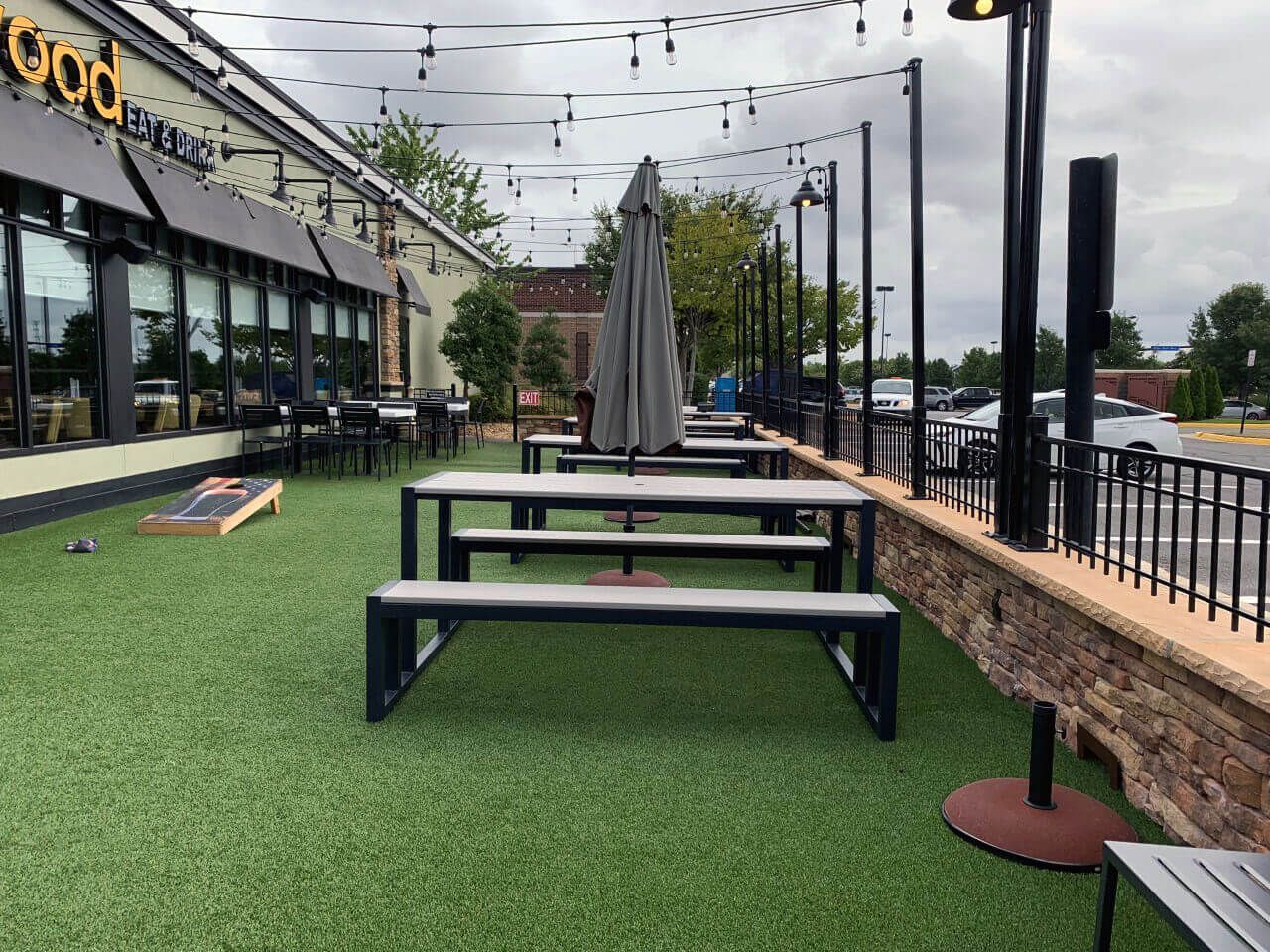
This is particularly relevant in modern developments where large expanses of glass sit close to landscaped courtyards and amenity areas. Artificial turf is increasingly used around patios, pet areas, recreational spaces, rooftops, and pools because it provides a consistent appearance without the maintenance requirements of natural grass. When reflected heat threatens that investment, treating the glass itself may provide a more practical solution than repeatedly repairing the landscape below it.
What Turf Protection Film Actually Does
Turf protection film approaches reflected-heat damage at its source: the glass. Instead of modifying or covering the synthetic turf, a specialty film is applied to the problem window to change how sunlight reflects from its surface. The goal is to reduce the concentrated reflection responsible for creating the damaging hot spot.
This is different from simply trying to shade the turf or selecting a different replacement product. When reflective glass is the source of the problem, addressing the window can help prevent the same concentrated heat pattern from continuing to strike the outdoor surface.
For many property owners, another important consideration is appearance. Large windows are often an intentional part of a building's design, providing natural light, outdoor views, and a clean architectural look. A turf protection solution should address the reflection problem without unnecessarily changing the character of the building or eliminating the usefulness of the glass.
Before installing turf protection film, several details should be evaluated:
- Which window or group of windows is creating the reflection
- Where the reflected sunlight lands throughout the day
- The size and location of the damaged turf area
- The orientation of the building and affected glass
- The type and condition of the existing windows
- Whether multiple reflective surfaces are contributing to the problem
- The appearance and visibility requirements for the glass
Correctly identifying the problem window is especially important on larger buildings. A courtyard may be surrounded by dozens of windows, but only a few may create the particular angle of reflection responsible for the damage. Treating the relevant glass rather than making unnecessary changes elsewhere can create a more targeted solution.
Why Treating the Glass Can Make More Sense Than Replacing the Turf Again
Artificial turf can represent a significant investment, particularly when it covers a large commercial courtyard, rooftop, pet area, or recreation space. Once installed, property owners reasonably expect it to provide years of use. Repeatedly replacing heat-damaged sections can become both expensive and disruptive.
There is also the challenge of matching replacement turf. Synthetic grass can change slightly in appearance as it ages and is exposed to the environment. Replacing one damaged section later may result in a visible difference between the new material and the surrounding existing turf.
Addressing the reflective glass may help protect both existing turf and repaired areas while preserving the overall landscape design. This can be particularly useful for commercial properties where a clean, consistent appearance is important to residents, guests, tenants, customers, or visitors.
Situations where a property owner may want to investigate turf protection film include:
- The same area keeps getting damaged. Recurring deterioration after turf replacement suggests the source of the heat may still be present.
- Damage appears in a concentrated pattern. A narrow or clearly defined hot spot can point toward reflected energy.
- Damage occurs near large windows. The relationship between the glass and turf should be evaluated.
- The affected area becomes hottest during a specific time of day. This may correspond with the changing angle of the sun.
- Replacing the windows is not practical. Specialty architectural film may provide a less disruptive approach.
It is important to diagnose the problem rather than assuming every damaged patch of synthetic grass is caused by glass reflection. Turf can also be affected by improper installation, concentrated heat from other sources, chemicals, heavy equipment, or physical wear. A site evaluation can help determine whether reflected sunlight is actually contributing to the damage before a film solution is recommended.
For Atlanta-area buildings with modern glass and artificial landscaping, this type of evaluation can be especially helpful because both features are increasingly common in new and renovated properties. The goal is to allow the glass and landscaped areas to coexist without one creating an expensive problem for the other.
Where Turf Protection Film Can Be Useful
Reflected-heat damage is not limited to traditional residential lawns. Artificial turf is now used in a wide variety of commercial and multifamily spaces throughout Atlanta and the Southeast. That makes turf protection film relevant anywhere synthetic grass has been installed close to reflective architectural glass.
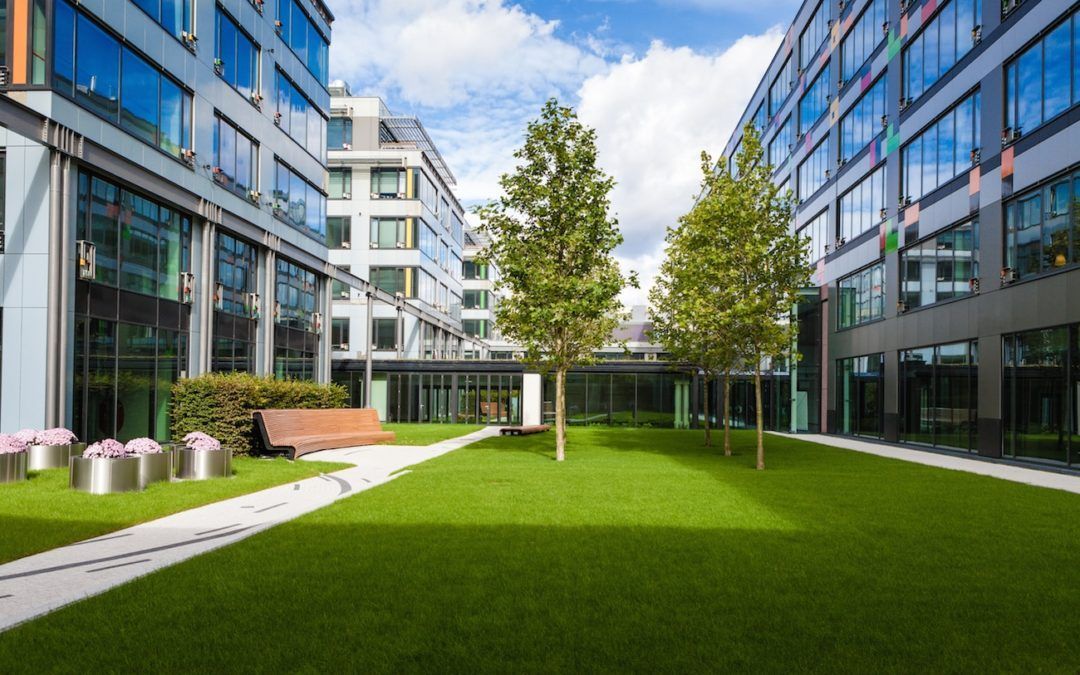
Multifamily properties are one good example. Apartment and condominium communities frequently use artificial turf in courtyards, pet areas, rooftop amenities, and recreation spaces because it stays visually consistent and reduces some of the maintenance associated with natural grass. These same spaces are often surrounded by buildings with large windows, creating conditions where reflected sunlight may become a concern.
Hotels, office buildings, mixed-use properties, and other commercial developments may encounter similar conditions. Artificial turf can help soften an urban environment and make outdoor amenity areas feel more inviting, but heat-damaged patches can quickly detract from the finished appearance.
Properties that may benefit from turf protection film include:
- Apartment and condominium courtyards
- Rooftop amenity areas
- Hotels and resort-style properties
- Office campuses and commercial courtyards
- Poolside recreation areas
- Pet relief and dog recreation areas
- Residential properties with synthetic lawns
- Mixed-use developments with landscaped common areas
The common factor is not the type of property but the relationship between the glass and the synthetic surface. If reflected sunlight is repeatedly creating a damaging hot spot, modifying that reflection can become an important part of protecting the landscape investment.
Professional Installation Helps Preserve the Look of the Glass
Architectural film needs to do more than perform a technical function. On commercial buildings in particular, the finished installation also needs to look clean and intentional. Windows are highly visible architectural elements, and poorly installed film can distract from the appearance of an otherwise polished property.
Professional installation begins with identifying the appropriate glass and preparing the surface correctly. The film should then be installed smoothly and consistently according to the requirements of the product and application.
A professional turf protection project may involve:
- Evaluating the location and pattern of turf damage
- Identifying the window surfaces responsible for the concentrated reflection
- Reviewing the existing glass and installation conditions
- Selecting an appropriate specialty film
- Preparing the glass for application
- Installing the film for a clean, consistent appearance
- Reviewing how the treated glass relates to surrounding windows and architecture
This targeted approach can be particularly appealing when property owners want to solve a practical problem without making major changes to the exterior design. Replacing architectural windows solely because of reflected turf damage can be disruptive and expensive. Specialty film offers another option for addressing the way the glass interacts with the surrounding outdoor environment.
Turf Protection Film Installation in Atlanta and the Southeast
Artificial turf and modern architectural glass can both add value to a property, but certain combinations can create an unexpected heat-reflection problem. Recognizing what is happening is the first step toward finding a solution that addresses the source rather than repeatedly repairing the visible damage.
Simple Architectural Finishes provides specialty architectural film solutions for commercial and residential properties in Atlanta and throughout the Southeastern United States. In addition to decorative and privacy films, surface finishes, graphics, and other architectural applications, specialty protection films can be used to solve unusual building challenges such as reflected sunlight affecting nearby synthetic turf.
Property owners and managers may want to consider a professional evaluation if artificial turf repeatedly melts, curls, discolors, or deteriorates near exterior windows. Observing when the damage occurs and determining which glass surfaces are producing the strongest reflections can help identify whether turf protection film is an appropriate option.
For apartment communities, commercial buildings, hotels, offices, mixed-use developments, and other properties throughout Metro Atlanta and the Southeast, protecting existing improvements can be more practical than repeatedly replacing them. A targeted film installation can help address reflected-heat concerns while maintaining the visibility, natural light, and architectural appearance provided by the building's windows.
If reflected sunlight from your windows is damaging artificial turf around your Atlanta property, contact Simple Architectural Finishes to discuss the affected area. By identifying the source of the reflection and applying the appropriate specialty film, it may be possible to protect your synthetic landscaping while preserving the overall design and functionality of the building.